Half Ounces, Full Obsessions: Inside America's Booming Decant Marketplace
There was a time when buying perfume in America followed a simple script: you walked to a department store counter, sprayed a card, and either committed to a full bottle or walked away. That script is being torn up. In 2025, a growing share of the fragrance community is buying perfume the way investors buy fractional stock — in small, carefully measured portions, from strangers they have never met.
The Five-Milliliter Marketplace
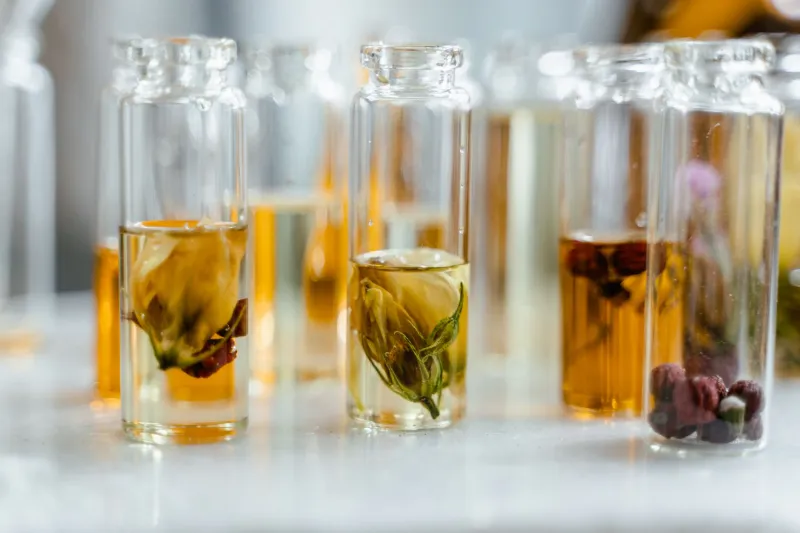
The mechanics are deceptively simple. A collector purchases a full bottle — perhaps a discontinued amber from a Parisian house, or a limited release that sold out in hours — then divides it into 3, 5, and 10 milliliter glass vials. Each vial is labeled, sealed, and sold at a proportion of the bottle's price, often with a modest premium for the labor and materials involved.
What began as a workaround for the high cost of niche perfumery has matured into a genuine marketplace. Dedicated decant services now operate with the professionalism of small brokerages: inventory tracking, tamper-evident vials, batch verification, and shipping that treats a half ounce of extrait like the small treasure it is. Meanwhile, informal networks — subreddits, Discord servers, Facebook groups — function as open exchanges where members post their shelves and negotiate swaps with the seriousness of traders moving securities.
The Collector Psychology of Fractional Ownership
Why would someone who loves perfume deliberately keep it in pieces? The answer, collectors say, is access and breadth. A full bottle from a respected artisanal house can easily run past three hundred dollars. A five-milliliter decant might cost twenty-five. For the price of one bottle, an enthusiast can live with a dozen compositions for a season — wearing each through heat waves, cold snaps, boardroom mornings, and slow Sunday afternoons.
There is also the matter of scarcity. Discontinued fragrances, reformulated classics, and small-batch releases have created a secondary market where partial bottles appreciate. Certain decants of out-of-production scents now change hands at prices that would have seemed absurd a decade ago. The bottle becomes an asset; the vials, its circulating currency.
And beneath the economics lies something more emotional: the pleasure of the complete collection without the burden of the complete shelf. A curated box of thirty vials tells a fuller story of a person's taste than thirty full bottles ever could — and it fits in a drawer.
Etiquette of the Trade
Like any marketplace built on trust, the decant world runs on unwritten rules. Veteran traders emphasize a few commandments:
- Disclose everything. Batch codes, storage history, fill level, and whether the bottle was previously opened are considered baseline honesty.
- Never decant from a tester. Testers are exposed to light, heat, and countless sprayer depressions; their integrity is compromised.
- Ship like it matters. Bubble wrap, padded mailers, and tracking are table stakes. A vial that arrives cracked is a relationship that arrives broken.
- Price fairly. The community tolerates a decanting premium; it does not forgive scalping disguised as one.
Reputation is the real collateral. On the major trading forums, feedback scores function like credit ratings, and a single dispute over authenticity can follow a seller across platforms.
The Risks Worth Naming
For all its charm, the decant economy carries genuine hazards. Counterfeits have infiltrated the secondary market, and a convincing fake can be split across dozens of unwitting buyers before anyone notices. Batch variation — a real and frequently debated phenomenon in perfumery — means a decant may smell different from the current retail formulation. And because decants are typically sold outside authorized retail channels, buyers have little recourse when something goes wrong.
There are legal gray areas, too. Reselling partially filled bottles generally falls into a tolerated zone, but sellers operating at scale without clear business practices invite scrutiny. The community itself has responded with self-policing: verification requirements, escrow-style middlemen, and increasingly sophisticated authentication guides for spotting fakes by box, glass, and juice color.
What It Means for the Way Americans Buy Perfume
The decant economy reflects a broader shift in how this country consumes luxury. We stream music rather than buy albums; we rent wardrobes; we subscribe to everything. Perfume, long the exception — a product demanding total commitment in a single purchase — is finally adapting. Try-before-you-buy culture has arrived at the fragrance counter, and it is being run by the customers themselves.
For brands, the trend is double-edged. Decants cannibalize some full-bottle sales, certainly. But they also function as the most trusted sampling program in existence, carrying niche houses into bathrooms and bedrooms they could never reach through department store testers. Many small American perfumers now quietly acknowledge that the decant trade built their customer base.
For the enthusiast, the message is simpler: you no longer need a fortune to smell like one. You need a vial, a trustworthy trader, and the patience to learn what you truly love — one half ounce at a time.