The Quiet Matchmakers: An Hour at the Counter With the People Who Sell Scent for a Living
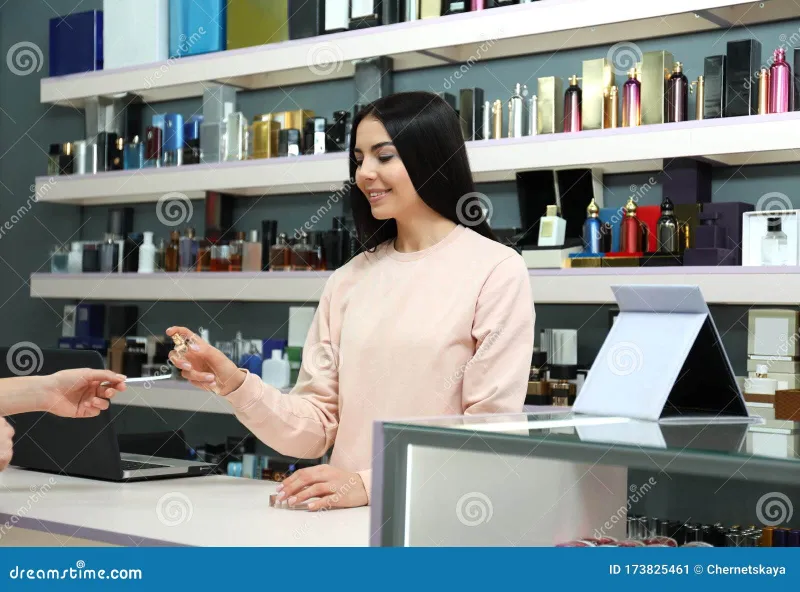
Photo: perfume boutique sales associate helping customer at counter elegant fragrance shop, via thumbs.dreamstime.com
There is a moment, familiar to anyone who has ever wandered into a perfume boutique without a plan, when the panic sets in. The shelves are beautiful and illegible. The first bottle you smell has erased your ability to smell anything else. And then, from behind the counter, a voice: Can I ask what you usually reach for?
That question is where the real work begins.
Reading a Customer in Ninety Seconds
Ask boutique advisors across the country what their job actually is, and almost none of them say "selling perfume." They say matching. Translating. Some say matchmaking, only half jokingly. The transaction is the smallest part of it.
A seasoned advisor learns to read a customer the way a tailor reads posture. The woman who apologizes before she's said anything usually wants something soft and reassuring, not a challenge. The man who announces he "doesn't wear cologne" often owns exactly one bottle he's never told anyone about. The teenager photographing bottles for a group chat isn't buying today — but she'll remember who took her seriously when she does.
"You learn to hear what people are actually describing," one advisor told us. "Nobody walks in asking for a chypre. They ask for something that smells like their grandmother's garden in Georgia, or the lobby of a hotel where they were happy once. My job is to get from that sentence to a bottle."
The Training Nobody Sees
Formal perfumery school is rare on the sales floor. What most advisors have instead is a self-built education: blotter strips at home, obsessive note-taking, tasting menus of raw materials — vetiver against iso e super, iris against ambrette — until they can name what they're smelling the way a sommelier names a fault in a wine.
Many boutiques run their own internal training, too. New hires might spend weeks with nothing but the house's core line, learning each composition's arc from first spray to final drydown. The best shops teach their staff to talk about longevity, sillage, and seasonality in plain language — no jargon unless the customer uses it first.
The result is a kind of fluency that no product page can replicate. An advisor knows that a particular tuberose turns soapy on some skins and narcotic on others. They know which of their lines works in humid Southern summers and which belongs to a New England October.
The Memorable Ones
Every advisor keeps a mental archive of great customer stories. The couple who came in arguing and left sharing one bottle, split between two vanities in different cities. The widower who brought in the last half-ounce of his late wife's signature and asked, quietly, if anything could be found near it. The recent graduate buying her first full bottle with her first real paycheck, wanting something that "smelled like having arrived."
These aren't anomalies. They are, advisors say, the texture of the work. Perfume sits closer to memory than almost any other purchase, and the counter becomes a place where people say things they wouldn't say anywhere else.
Why the Human Still Beats the Algorithm
Recommendation engines can process purchase history. They cannot register the hesitation in someone's voice when they mention an old bottle, or the way a customer leans in when a strip passes under their nose a second time.
That is the advisor's edge: pattern recognition of a human kind. They notice that you tested three vanillas but only bought the one with smoke in it. They remember, months later, that you loved a particular iris, and they set aside its new release before it sells out. In an era when fragrance discovery increasingly happens through fifteen-second videos, the boutique counter has become something almost countercultural — a slow, personal, unhurried channel for finding something you'll wear for years.
The Quiet Influence
It would be easy to underestimate these people. They don't have follower counts. Their recommendations don't trend. But their fingerprints are on thousands of American vanities — every bottle chosen not because it was popular, but because someone behind a counter listened carefully, asked one more question, and knew exactly what to reach for.
The next time an advisor slides a blotter across the glass and says, try this one, you're not being sold to. You're being introduced. And in perfumery, as in life, the best introductions tend to last.


