The Invisible Merchandising: How American Boutiques Bottle Their Atmosphere
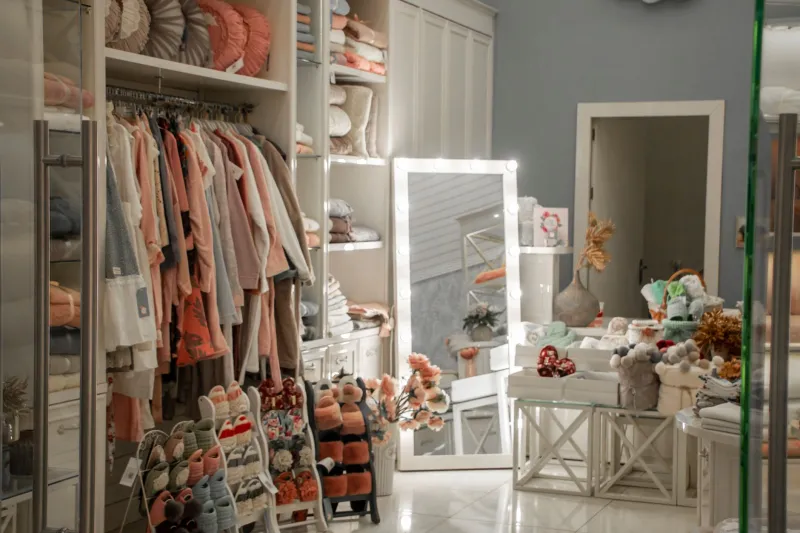
Walk into a well-run boutique in Austin, Chicago, or Brooklyn and notice something before you see anything at all. The air itself has been considered. There is a dry fig note drifting from the fitting rooms, or a whisper of cedar and black tea that seems to slow your pace by half a step. This is not an accident, and increasingly, it is not a coincidence. It is merchandising you cannot photograph.
The Retailer's Second Inventory
Scent branding consultancies have quietly become fixtures on the vendor lists of American retailers, sitting alongside lighting designers and visual merchandisers. The logic is straightforward: customers decide within moments whether a space feels worth their time, and ambient fragrance shapes that judgment before a single garment is touched.
"A store's scent is the only part of the experience the customer never stops inhaling," says a scent-marketing consultant we spoke with, who designs custom diffused fragrances for independent retailers across the country. "Lighting can flicker, music can be skipped. Scent is continuous. It's the atmosphere's longest-running employee."
The applications vary by business. Hotels were the early adopters, engineering lobbies that smell of white tea and leather so that guests associate calm with the brand itself. Coffee shops followed, though they had a head start — the beans did the branding for free. Now clothing boutiques, yoga studios, and even independent bookstores are commissioning signature blends, diffused on timers through HVAC systems or discreet atomizing units tucked behind the register.
Why Lingering Is the Whole Business Model
The commercial rationale is less about persuasion than about permission. A pleasant ambient scent signals that a space is cared for, and cared-for spaces invite browsing. Retail studies have long suggested that shoppers stay longer and perceive merchandise as higher quality in fragranced environments. The boutique owner we spoke with — who runs a womenswear shop in Savannah, Georgia — put it more plainly.
"We introduced a custom vetiver and neroli blend two years ago," she says. "I can't hand you a spreadsheet proving it works. What I can tell you is that people take their time now. They sit in the reading chair. They ask what the smell is. That question is a conversation, and the conversation is the sale."
There is also a defensive logic at work. As American retail migrates online, physical stores must offer something a checkout page cannot. Atmosphere — the full sensory envelope of a space — has become the product alongside the product.
The Signature Scent, Demystified
What goes into these custom blends? Typically a restrained palette: a base of cedarwood, vetiver, or amber; a heart of fig, iris, or green tea; and a bright top note — bergamot, cardamom, pink pepper — that keeps the room from feeling heavy. The best retail scents are deliberately quieter than personal perfumes, because they must live in the air rather than on skin.
Cost has fallen considerably. What once required a fragrance house contract is now achievable through boutique scent-design studios that develop custom oils for a few hundred dollars, paired with ultrasonic or nebulizing diffusers that run on programmable schedules.
Bringing the Boutique Home
For readers who want that 'expensive store smell' at home — and our mail suggests many do — the principles translate cleanly:
- Choose a base note and commit. Retail scents work because they are consistent. Pick a room fragrance built on cedar, vetiver, or amber, and let it define the space.
- Diffuse, don't douse. A low-output electric diffuser on a timer mimics the retail model: continuous, subtle, never announcing itself.
- Zone your fragrance. Boutiques scent the entry and the fitting area, not the stockroom. At home, target the hallway or living room — spaces guests pass through — rather than the whole floor plan.
- Layer with textiles. Scent clings to fabric. A lightly fragranced linen spray on curtains and upholstery extends the effect the way a boutique's dressing-room curtains do.
- Keep it quiet. If you can identify the scent from the doorway, it is too strong. The goal is atmosphere, not announcement.
The Story in the Air
At LMS Fragrances, we have long argued that a scent is a narrative — a way of telling someone who you are before you speak. American retailers have simply learned to tell that story in three dimensions. The next time you linger in a store longer than you intended, breathe in and ask why. Then bring the answer home, and let your own rooms tell theirs.