The Unseen Outfit: Building a Fragrance Wardrobe for the Camera-Only Workday
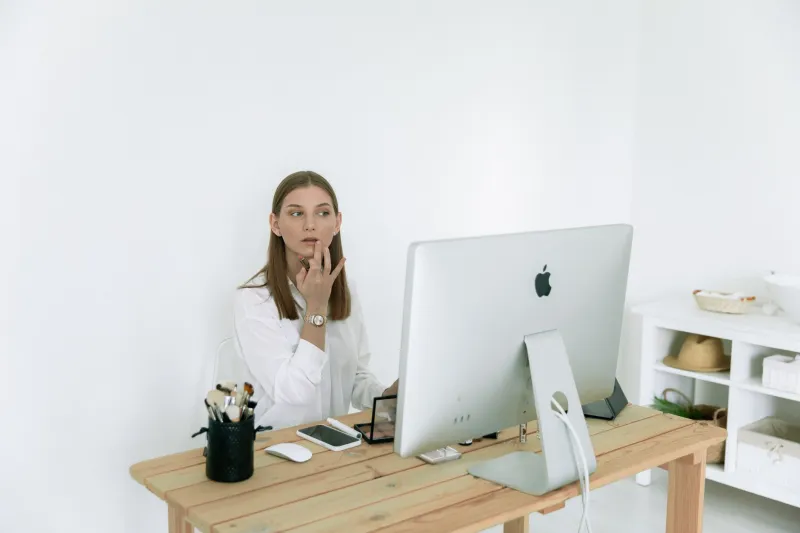
There was a time when getting ready for work meant a mirror, a closet, and a commute. Now it means a ring light, a neutral background, and — if you're among the growing cohort of American professionals who never fully returned to the office — a decision that no one else in the meeting can perceive: what to spray.
It sounds absurd on the surface. Fragrance is, by definition, invisible. Yet ask anyone who has spent the last four years working from a guest bedroom in Denver or a corner of a Brooklyn studio, and a curious pattern emerges. The perfume ritual didn't disappear with the dress code. It intensified.
The Only Thing Left to Wear
Consider what the workday wardrobe has lost. The blazer hangs unworn. The shoes live by the door like museum artifacts. What remains — what genuinely remains — is the private ceremony of fragrance. And unlike the outfit your colleagues will never see, a scent is not for them anyway. It is for you.
This is the paradox at the heart of the modern work-from-home fragrance habit: it is the most self-directed form of grooming we have. You are the sole audience. You are also, according to the people who study these things, the primary beneficiary.
"Olfaction is the only sense that wires directly into the limbic system before it reaches conscious thought," explains Dr. Maren Kellerman, a fragrance psychologist based in Chicago who studies the relationship between scent and professional confidence. "When you apply a perfume before a high-stakes call, you are essentially setting your own emotional stage. Nobody else needs to smell it for it to work. The wearer is the client."
Kellerman has watched the phenomenon accelerate as hybrid work settled into permanence. Her clients describe a two-tier system that mirrors the way they once divided their closets: a daytime register and an evening one.
The Meeting Scent, Defined
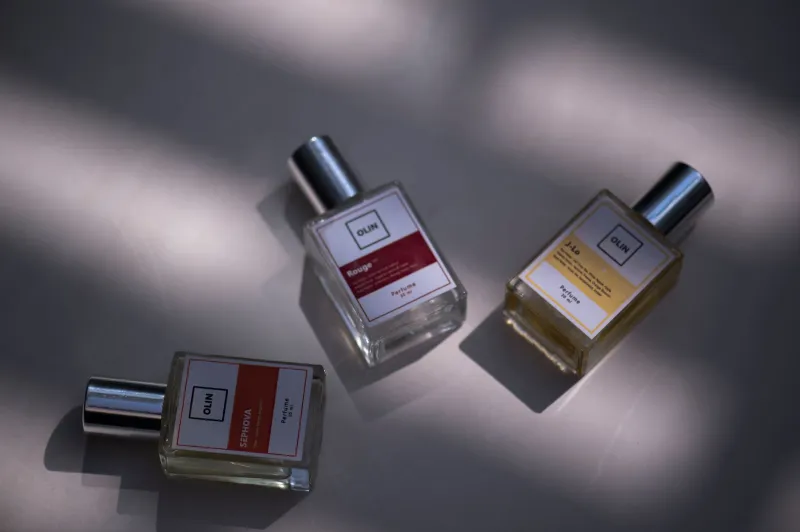
The daytime register — call it the meeting scent — tends toward the intimate. Skin scents, soft musks, whisper-quiet cedar, a trace of neroli. These are fragrances with a projection radius of roughly an arm's length, designed to be discovered rather than announced. Think of them as the olfactory equivalent of a pressed shirt: presentable, composed, never shouting.
The evening register is another animal entirely. When the laptop closes and dinner reservations or drinks appear, the statement fragrances come out — the ouds, the tuberoses, the amber resins that fill a room the way a great coat fills a doorway. The same person who wore a barely-there iris at 9 a.m. might be wearing something with genuine theatrical ambition by 8 p.m.
What's striking is how deliberate this has become. Fragrance enthusiasts on American forums and subreddit communities trade recommendations specifically for "Zoom days" versus "office days," a vocabulary that simply did not exist in 2019. Niche houses have noticed; several now market extraits and eaux in explicitly seasonal and situational terms.
Confidence You Can't See on Camera
The psychological case for the meeting scent goes deeper than ritual. Kellerman points to what researchers call enclothed cognition — the measurable effect that clothing has on the wearer's performance and self-perception. Fragrance, she argues, operates on the same circuit without requiring a single visible thread.
"A signature scent functions as an identity anchor," she says. "On a day when every other professional cue has been stripped away — no office, no colleagues, no commute — the perfume tells you who you are at work today. That matters enormously when your only external feedback is a grid of faces and your own reflection in the preview window."
There is also a memory component. Because scent and memory are so tightly linked, professionals who wore a particular fragrance during a successful pitch or a difficult quarter often return to it as a kind of talisman. The bottle becomes a portable pre-game ritual.
How to Build Your Two Registers
For those ready to formalize the practice, the method is refreshingly simple.
Start with the day. Look for compositions built on musk, iris, blond woods, green tea, or citrus with restraint. Test them at home on a workday — the true measure of a meeting scent is whether it disappears from your own awareness within an hour, leaving only a faint hum of composure.
Then choose the night. This is where you indulge. If a fragrance makes you pause at the door of a restaurant, it belongs in the evening register.
Finally, resist the urge to collapse the two. The discipline of a lighter scent for work is precisely what makes the statement fragrance feel like an event. In an era when every day can look identical on camera, that contrast is not vanity. It is structure.
The webcam may never capture what you're wearing. But you will know. And on the days that test you, that may be the most professional thing you put on.