Give It Ten Minutes: A Perfumer's Ritual for Testing Fragrance the Right Way
There is a quiet moment in every boutique — a customer sprays a blotter, inhales, and declares a verdict within seconds. We understand the impulse. A first impression is seductive. But perfume is not a snapshot; it is a film with three acts, and judging it at the opening is like leaving the theater before the story begins.
At LMS Fragrances, we believe that learning to test a scent properly is the single most valuable skill a fragrance enthusiast can develop. It transforms shopping from guesswork into genuine discernment — and it saves you from the graveyard of half-worn bottles gathering dust on the dresser.
Why Skin, Not Paper, Tells the Truth
Blotters have their place. They are excellent for narrowing a field of candidates and for comparing raw accords side by side. But paper is inert. It cannot replicate body heat, skin chemistry, or the natural oils that reshape a composition over hours.
Your skin is a living canvas. The same eau de parfum can smell green and bright on one wrist and warmer, rounder, faintly sweeter on another. Diet, hydration, even the pH of your skin all play a role. This is why a fragrance beloved on a friend may fall flat on you — and why the only reliable test is the one performed on your own arm.
The Ritual: Ten Minutes, Step by Step
Treat the following less as instructions and more as a small ceremony. Set aside ten unhurried minutes.
Minute one: the blotter pass. Begin on paper, not skin. Spray each candidate onto a labeled blotter and wave it gently beneath your nose. Do not fan aggressively — you are reading a whisper, not a shout. At this stage, you are simply eliminating the obvious rejections.
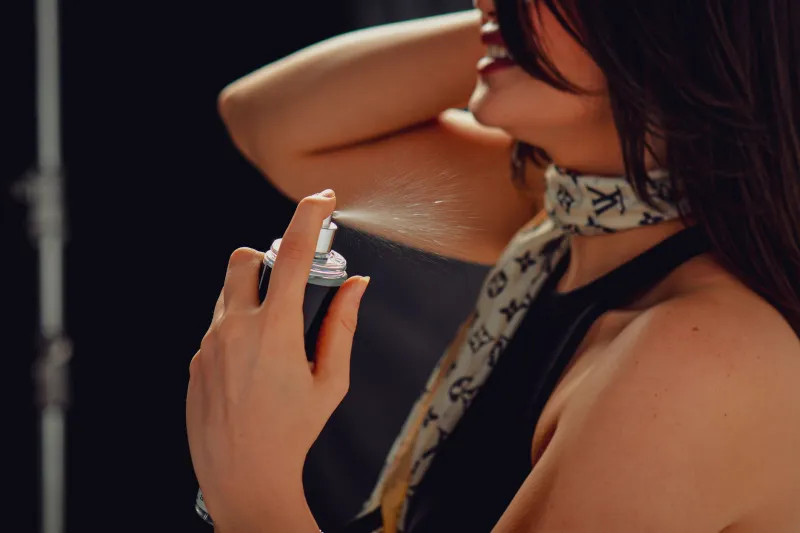
Minutes two through three: the first application. Choose your strongest one or two contenders and spray once onto clean, unscented skin — the inner forearm or the crook of the elbow works beautifully. Resist the temptation to spray both wrists and touch them together. Which brings us to a crucial point.
The Cardinal Sin of Rubbing
We say it gently, but we say it often: never rub your wrists together after applying fragrance. Friction heats the skin and fractures the delicate top notes — the very citrus, herbs, and light florals a perfumer composed to introduce the scent. Rubbing accelerates evaporation and collapses the fragrance's natural timeline, often muting the drydown before it has a chance to speak.
Let the perfume settle undisturbed. Patience is part of the craft.
Minutes four through six: the heart reveals itself. This is where the composition opens up. Top notes — the sparkling, volatile materials like bergamot, pink pepper, or aldehydes — begin their exit, and the heart of the fragrance steps forward: jasmine, iris, rose, tobacco leaf. Inhale at intervals rather than constantly. Your nose fatigues quickly; stepping away for a moment and returning gives you a fresh read.
Minutes seven through nine: ask better questions. Move beyond do I like it? Ask instead: What does this remind me of? Where could I imagine wearing it — a boardroom in Chicago, a late-summer evening in Savannah, a quiet Sunday at home? Does it feel like an extension of how you already dress, or is it a costume? The best fragrances feel inevitable, as though they had been waiting for you.
Minute ten: the verdict — provisional. Make a note, then let it go. The true drydown, the base of sandalwood, amber, musk, or vetiver, may take hours to fully express itself. If a scent genuinely intrigues you, wear it for a full day before deciding. A boutique purchase should be a considered one.
Common Mistakes That Cost Money
A few pitfalls we see regularly, even among seasoned collectors:
- Testing too many at once. Three fragrances on skin is the practical ceiling. Beyond that, your nose surrenders.
- Testing over lotion or a scented shower gel. Layering is a beautiful technique — but only when done deliberately. For sampling, start neutral.
- Judging in a rush. Sampling on your way to an appointment guarantees a shallow read. Give the fragrance your time.
- Ignoring the drydown entirely. Many fragrances that open sharply settle into something gorgeous. The reverse is also true.
Shop Like a Perfumer
The perfumers we admire approach every scent with curiosity rather than judgment. They sniff, wait, and return. They let the fragrance finish its sentence.
Adopt that same patience, and something shifts: you stop buying what smells good in the moment and start choosing what lasts — on your skin, in your memory, and in the story you tell without saying a word.