Terroir in a Bottle: Seven Family Farms Growing America's Next Great Perfume Notes
Perfumery has always been a conversation with the land — just rarely with American land. For most of the industry's history, the great materials came from elsewhere: Grasse for rose and jasmine, Calabria for bergamot, Haiti for vetiver. But a new generation of small farms and distillers from Washington State to the Carolinas is changing the provenance of the natural perfume palette, and niche perfumers are paying attention.
What follows is a field guide to seven of the operations leading this movement — the terroir they work, the seasons that define them, and the scents their harvests produce.
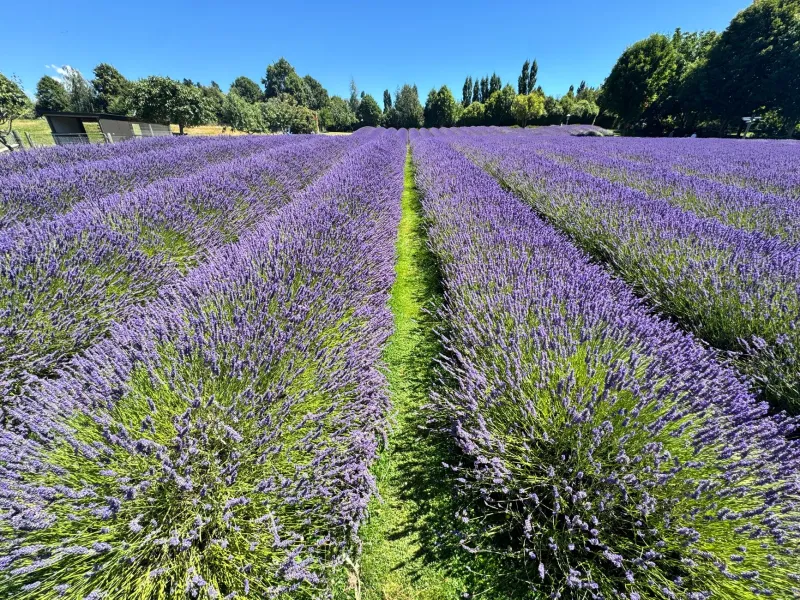
1. Skagit Valley Lavender — Mount Vernon, Washington
The same glacial soils and mild marine climate that make the Skagit Valley famous for tulips also produce a lavender with a distinctive signature: cooler, greener, and less camphorous than the Provençal standard. The long Pacific Northwest daylight of early summer concentrates aromatic oils slowly, yielding an essential oil with an almost herbal-tea softness. Harvest runs late June through July, when the spikes are cut by hand at first bloom. Perfumers prize this oil for fougères and calming accords that read as fresh rather than medicinal.
2. Willamette Valley Orris — Salem, Oregon
Iris is perfumery's most patient material, and Oregon's answer to it may be its most promising. The Willamette Valley's wet winters and dry summers suit the iris pallida rhizome, which must be dug, peeled, and then aged for three to five years before distillation — a wait that converts its roots into the powdery, violet-scented compound called irone. A handful of Oregon growers now supply small-batch orris butter to artisan houses, and the terroir shows: a cool, rooty depth with a rain-soaked earthiness that Tuscan material doesn't quite replicate.
3. Texas Cedarwood — the Hill Country and East Texas
The Ashe juniper and Texas cedarwood harvest is less a farm than a stewardship — thinning invasive juniper scrub that otherwise crowds out ranchland, then steam-distilling the wood into an oil of smoky, pencil-shaving warmth with a honeyed, almost leathery undertone. Distillers operating around Uvalde and east toward the Louisiana line supply a material that appears in countless American fragrances, often uncredited. Its drydown is the backbone of many a rugged masculine composition.
4. Colorado Alpine Lavender and Mint — the Western Slope
High-elevation growing stresses plants in productive ways: at several thousand feet on Colorado's Western Slope, lavender and peppermint develop denser, brighter oil profiles than their lowland cousins. Small distillers here run copper stills from August into September, producing peppermint with a clean, crystalline sweetness and lavender with an alpine snap. Both have found devoted followings among perfumers building fresh, transparent compositions.
5. North Carolina Tobacco Leaf and Absolute — the Piedmont
Tobacco carries complicated cultural weight, but as a perfumery material it is remarkable — and the Piedmont's historic growing regions still produce leaf that, once extracted, offers dried fruit, hay, and warm sweetness. Small extraction houses working with cured leaf from family farms supply the tobacco absolutes behind some of the most beloved amber and honey accords in American niche perfumery. Harvest and curing run from late summer into autumn.
6. California Orange Blossom — Riverside County
A descendant of the citrus groves that once defined Southern California, a few surviving Riverside County growers still sell orange blossom to the fragrance trade. Picked in spring, the flowers yield an absolute that is greener and more radiant than the North African standard, with a sunlit, almost honeyed lift. It is a material defined by scarcity; groves give way to development every year, which makes each harvest more precious.
7. Vermont Birch and Balsam — the Northeast Kingdom
The Northeast Kingdom's cold forests supply birch tar and balsam fir — materials that defined the great American chypres and leather accords of the twentieth century. Small producers still tap and distill in the traditional way, yielding a birch tar with smoky, tarry intensity and a balsam with a Christmas-morning resinous glow. Harvest is a winter activity, often alongside maple season.
Why Provenance Matters
Buying fragrance made with American-grown naturals is not merely patriotic shopping; it is a shorter supply chain, traceable harvests, and a material whose story you can visit. Ask your favorite niche houses where their lavender and cedar come from. Increasingly, the answer is a farm you could drive to — and that, as much as anything in the bottle, is worth savoring.