Smelling America: Perfumers Bottling Bluebonnets, Cedar Smoke, and the Fog Off the Pacific
For more than a century, fine fragrance answered to Paris. The reference materials, the trained noses, the vocabulary of luxury—all of it flowed from a handful of European houses operating under assumptions about what a perfume ought to be. That monopoly on olfactory imagination is loosening, and the counterargument is being written in an unexpected dialect: the scent of Texas roadside wildflowers, the mineral chill of Pacific Northwest rain, the resinous hush of an Appalachian forest at dusk.
A growing cohort of American perfumers is practicing what might be called domestic terroir—the conviction that a landscape can be translated into an accord, and that buyers hungry for authenticity will recognize their own geography when they smell it.
The Case for Regional Scent Identity
Terroir, a term borrowed from wine, describes the total influence of place on a raw material: soil, climate, altitude, even the hands that harvest. In perfumery, it explains why Grasse jasmine is prized above jasmine grown elsewhere. American perfumers are now asking a subversive question—why should the only terroir that matters be French?
The answer, increasingly, is that it shouldn't. A fragrance built around cedar smoke and dry grass tells a story no Parisian house can authentically tell, because it isn't their story to tell.
Texas: Capturing a Roadside in Bloom
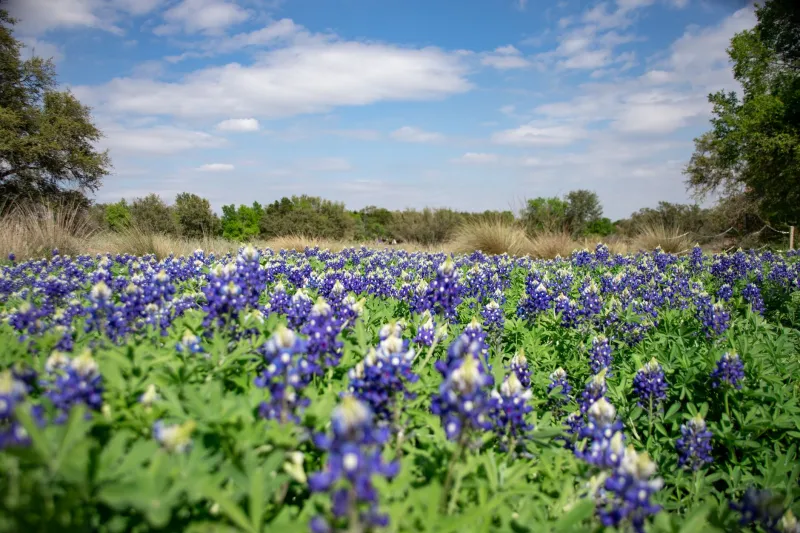
In the Hill Country west of Austin, bluebonnets pose a particular challenge: the state flower yields almost nothing to traditional extraction. The bloom is too delicate for distillation and too sparse for solvent extraction at scale. Perfumers working in the region have resorted to headspace technology—capturing the volatile molecules radiating off a live field—then reconstructing the profile from naturals and safe synthetics.
One Texas-based perfumer described the process as "forensic botany." The resulting accord pairs a soft, powdery floral facet with sun-warmed earth and a whisper of green stem, an unmistakable portrait of an April morning along a ranch road. Because the material cannot be farmed, every bluebonnet fragrance on the market is necessarily an interpretation—yet buyers respond to the fidelity of the memory it evokes, not the literalness of the extraction.
The Pacific Northwest: Rain, Resin, and Salt
Farther north, the palette shifts dramatically. The coastal fog that drapes the Oregon and Washington shoreline carries a signature of salt, wet stone, and conifer resin. Perfumers in Portland and Seattle have built entire collections around it, leaning on materials like ambroxide for the marine-mineral effect and locally significant woods—Douglas fir, western red cedar—for structure.
Some have gone further, partnering with small-scale harvesters who gather moss and balsam fir needles as byproducts of sustainable forestry. It is sourcing with a paper trail, and it resonates with a customer base that increasingly reads an ingredient list the way a diner reads a menu.
Appalachia: The Forest Floor Accord
The Appalachian range offers perfumery's most humbling raw materials: humus, leaf litter, damp bark, the cool darkness under a rhododendron canopy. These are not glamorous materials. They are, however, deeply evocative, and the region's small-batch perfumers have become specialists in the forest-floor accord—layering oakmoss, vetiver, patchouli, and mushroom-like nuances into compositions of remarkable depth.
Because many of these perfumers live within driving distance of the forests that inspire them, the sourcing is often personal. A harvester they know by name. A ridge they hike in October. That proximity shows up in the finished work as a kind of specificity no multinational composition brief can replicate.
Why Buyers Are Responding
Market data supports what these artisans already sense. American consumers, particularly younger ones, report valuing provenance and narrative over heritage branding. A perfume that smells like somewhere they've been—glamping in Big Bend, hiking the Appalachian Trail, waiting out a drizzle in a Seattle café—offers something a French floral cannot: recognition.
There is also a practical dimension. Domestic sourcing shortens supply chains, reduces exposure to the volatility that has battered natural material markets in recent years, and allows small houses to tell a traceable story from harvest to bottle.
A New Chapter, Written in American English
None of this signals the end of European perfumery, nor should it. Grasse will remain Grasse. But the American landscape—vast, regional, stubbornly local—has finally entered the conversation as a source of inspiration rather than merely a market. The bluebonnets of Texas, the fog of the Pacific coast, and the old-growth quiet of Appalachia are no longer just places. They are accords. And they are being written by perfumers who grew up breathing them.