Reading the Label Like a Sommelier: Ten Materials That Define Modern Perfumery
Ask a wine lover what makes a bottle extraordinary and they will speak of terroir, harvest, and patience. Perfumery asks for the same reverence. The difference between a fragrance that fades by lunch and one that lingers on a silk scarf for days often comes down to a handful of raw materials—some of which are rarer, by weight, than gold.
For the American fragrance enthusiast ready to move past marketing copy and read a scent label the way a sommelier reads a wine list, these ten materials are the essential vocabulary.
1. Iris Root (Orris)
Harvested from the rhizomes of the iris pallida, chiefly in Tuscany, orris must be aged for three to five years before it develops its powdery, coolly elegant character. The wait, combined with yields measured in ounces per acre, explains the price: top-grade orris butter can exceed $30,000 per kilogram. In a composition, it lends a suede-like, almost melancholic beauty—the signature of countless luxury florals and aldehydic classics.
2. Calabrian Bergamot
Nearly all the world's fine bergamot grows in a narrow coastal strip of Calabria, in southern Italy, where the fruit's bitter, sunlit juice brightens the opening of everything from traditional colognes to modern chypres. Its essential oil is cold-pressed from the peel within hours of harvest. It is the sparkle at the top of a fragrance—effervescent, refined, gone too soon.
3. Oud
Perhaps the most expensive raw material in perfumery, oud is the resinous heartwood of Aquilaria trees, formed only when the tree becomes infected with a particular mold. Wild-harvested oils from Laos, India, and Cambodia can command tens of thousands of dollars per kilogram. Its effect is unmistakable: smoky, leathery, honeyed darkness. Western houses once used it sparingly; today it anchors some of the most talked-about releases on American counters.
4. Ambrette Seed
A musk without any animal origin, ambrette is pressed from the seeds of a hibiscus relative grown in India and Madagascar. It delivers a soft, skin-warm, slightly fruity muskiness that modern perfumery prizes precisely because it is plant-based. Think of it as cashmere for the nose.
5. Jasmine Absolute
Grasse jasmine is legendary, but Egyptian jasmine from the Nile Delta supplies much of the industry. Blossoms must be picked before dawn, while their perfume is at its peak, and hundreds of thousands of flowers yield a single kilo of absolute. The result is a narcotic white floral—creamy, heady, faintly animalic—that forms the heart of innumerable feminine classics.
6. Sandalwood
Australian sandalwood from sustainable plantations has largely replaced the over-harvested Mysore variety, though Indian santalum remains the benchmark. The oil is creamy, milky, and meditative, functioning as both a star note and a fixative that extends a fragrance's life on skin. It is the reason certain scents seem to glow for twelve hours.
7. Vetiver
Distilled from the roots of a tropical grass cultivated in Haiti, Haiti's vetiver is prized for its dry, smoky, grapefruit-edged earthiness. It grounds masculine fragrances and adds sophistication to fresh compositions alike. Few materials so effortlessly convey understated elegance.
8. Rose Otto and Rose Absolute
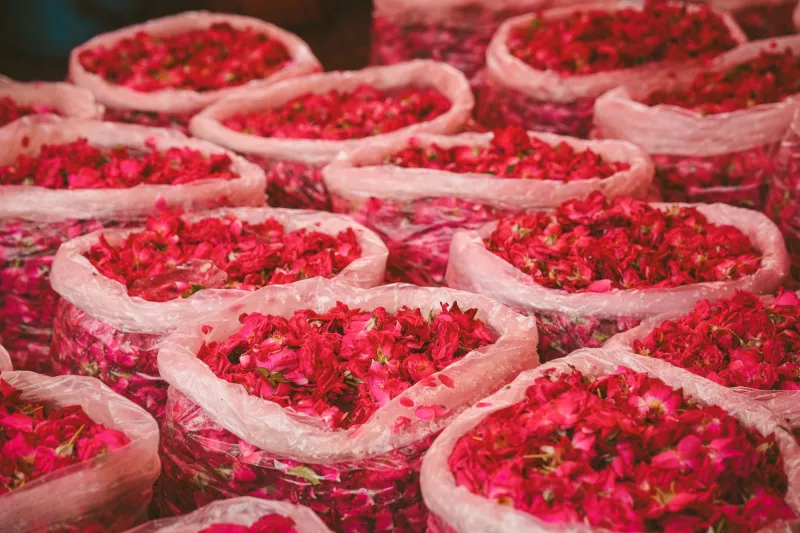
Bulgaria's Valley of Roses and Turkey's Isparta region harvest Damask roses in a frantic few weeks each May. Rose otto, the steam-distilled oil, is astonishingly precious—roughly four tons of petals per kilogram of oil. In a formula, rose brings depth beyond its pretty face: honeyed, peppery, lemony, sometimes green.
9. Labdanum
A sticky resin gathered from the rockrose shrub of the Mediterranean, labdanum is the backbone of the amber accord. Its balsamic, leathery sweetness evokes warm skin and old libraries. Without it, the great chypres and ambers of perfumery simply would not exist.
10. Ambroxan
The modern exception: a molecule derived from clary sage extracts rather than a harvested botanical. Ambroxan delivers that radiant, mineral, skin-magnifying warmth found in countless contemporary bestsellers. It is the reason a fragrance can smell expensive without smelling old-fashioned.
Learning the Language
The next time you sample a fragrance, look past the marketing notes—"ocean breeze," "midnight orchid"—and consider the materials doing the real work. A fragrance built on orris and sandalwood will behave differently on your skin than one built on ambroxan and hedione. Understanding these ten materials will not make you a perfumer, but it will make you a far more discerning collector—and, like any connoisseur, you will never read a label the same way again.